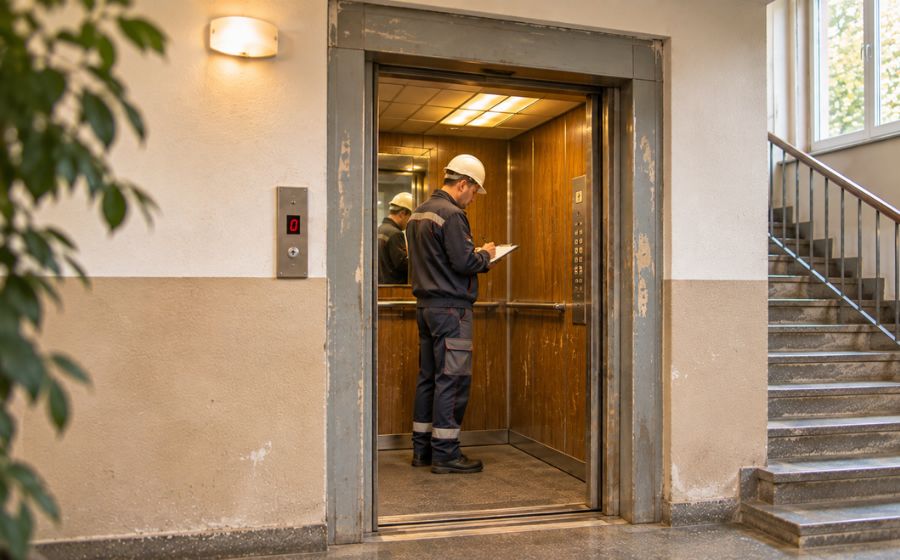
An elevator is something we rely on every day, yet we often pay attention to its condition only when a serious breakdown occurs. Frequent breakdowns, unusual noise, uneven travel and rising repair costs are warning signs that should not be ignored.
For many residential buildings in Bulgaria, the question is no longer just how to repair the old elevator, but whether repairs are still the most sensible solution.
When is modernization needed, and when is it better to invest in an entirely new elevator?
The answer depends on the installation's technical condition, safety, intensity of use and long-term maintenance costs.
1. Frequent breakdowns and rising repair costs
One of the clearest signs that an elevator needs a thorough assessment is an increase in the frequency of breakdowns.
If the elevator breaks down regularly, individual components fail repeatedly, or repairs are becoming increasingly expensive, a full inspection of its condition is needed.
In such situations, it is important to consider not only the cost of the next repair, but also the total maintenance costs over the coming years.
Sometimes replacing a specific component is entirely sufficient. In other cases, however, the accumulated problems indicate that a more extensive upgrade is needed.
2. Outdated components and difficult maintenance
Over time, an elevator's mechanical and electrical components wear out. With older installations, suitable spare parts can be hard to find, and replacing one element does not always solve problems with the other systems.
The drive, controller, braking system, doors and safety devices deserve particular attention.
The age of an elevator alone is not enough to determine whether it needs to be replaced. What matters is its actual technical condition, the repairs carried out, the availability of spare parts and its capacity for reliable operation.
That is why a professional technical assessment is the best starting point for making a decision.
3. Safety must come first
Reliable elevator operation is not measured solely by whether the car travels between floors. It is equally essential that its safety systems function properly.
Door problems, inaccurate floor leveling, braking system faults or other irregularities require timely inspection by qualified specialists.
When non-compliance with the applicable safety requirements is identified, it must be remedied in accordance with the inspection orders and the regulations in force.
Depending on the condition of the installation, the solution may be repair, modernization or complete replacement. Most importantly, necessary action should never be postponed at the expense of user safety.
4. Inconvenience in everyday use
Sometimes the warning signs are not linked to a specific breakdown, but to a gradual decline in ride comfort.
Loud noise, vibration, abrupt starts or stops, slow travel and sluggish door operation can make everyday use of the elevator unpleasant and unsafe for residents.
This is especially important in buildings with elderly residents, families with young children and people with reduced mobility.
Modern elevator systems offer solutions for smoother travel, more precise control and greater comfort. With a well-chosen modernization, some of these improvements can be achieved without a complete replacement of the installation.
5. Modernization or an entirely new elevator?
This is one of the most important questions every owners' association faces when its elevator is ageing.
Modernization can be a suitable solution when the main structure and certain mechanical components are in good condition, but the controller, drive, doors or other systems need upgrading.
Depending on the specific project, modernization can improve the installation's reliability, comfort, control and energy efficiency.
Complete replacement deserves serious consideration when the elevator is heavily worn, problems affect multiple major components, or the necessary repairs no longer offer a reasonable long-term outlook.
A new elevator makes it possible to choose modern equipment tailored to the building's characteristics, traffic load and the needs of its occupants.
There is no one-size-fits-all solution for every building. The right choice is made after assessing the technical condition and comparing the available options, their costs and expected benefits.
6. How to plan an elevator replacement
Replacing an elevator is a significant investment for any owners' association. That is why it is advisable to start the process with proper preparation, rather than waiting until the installation stops working.
Here are a few key steps:
- Technical assessment: determining the condition of the existing equipment and the measures required.
- Comparison of solutions: evaluating whether repair, partial or full modernization, or a new elevator is appropriate.
- Collecting quotes: comparing technical specifications, the scope of supply and installation, warranty terms and service maintenance.
- Budget planning: considering the initial investment and the expected operating and maintenance costs.
- Organizing the works: agreeing on timelines, work stages and the measures needed to minimize inconvenience for residents.
The owners' association's decision must be made in compliance with the applicable legal requirements. Good coordination between the owners, the building manager and the selected contractor is key to the successful completion of the project.
7. What to consider when choosing a new elevator
When choosing a new installation, price should not be the only consideration. An elevator is a long-term investment, and the quality of the equipment, the reliability of its systems and the availability of ongoing service are just as important.
The key criteria include:
- rated load and car capacity;
- number of floors and intensity of use;
- drive type and control system;
- ride smoothness and noise level;
- energy efficiency;
- safety systems and compliance with the applicable requirements;
- warranty terms, spare parts availability and service support.
It is also important that the decision takes into account the specific features of the building - the available space, the shaft, the machine room (where there is one) and the technical feasibility of installation.
A well-chosen elevator provides not only greater everyday comfort, but also a better foundation for reliable operation in the years ahead.
A timely decision prevents future problems
Elevator wear is entirely normal, but how it is managed makes a difference. When problems are assessed in good time, the owners' association has more options to plan its budget and choose the right solution.
Sometimes a well-planned modernization is entirely sufficient. In other cases, investing in a new elevator is the more sensible choice in the long run.
At National Elevator Company (NEC), we offer vertical transportation solutions - from the supply and installation of new passenger elevators to the repair, maintenance and modernization of existing installations.
Get in touch with us to discuss the options for your building and choose a solution tailored to its technical characteristics and the needs of its users.